
Independent Bodybuilding Association
Independent Bodybuilding Association
BIKINI
BIKINI
The Bikini division consists of two segments: Group Comparisons, which are scored, and Individual Presentations, which remain unscored.
- Participants compete wearing two-piece bikinis of any color, often with decorative crystals.
- Thong or T-back bikinis are not permitted. Bottoms must fully cover the glutes and be securely fastened. (see images below for coverage)
- The top must provide full coverage and support, with straps crossing neither in front nor behind.
- Competitors are required to wear clear, high-heeled shoes. No height restrictions, but shoes should not hinder movement or posing.
- Jewelry is allowed but should not distract from the physique’s presentation.
- A dark, even spray tan enhances stage appearance, aiding judging evaluation.
- Number tags must be clearly visible on the hip of the leg facing the judges (left or right) and on the back of the suit.
- You must be at least 16 years old on the competition day. Minors under 18 require parental approval and must be accompanied by a guardian.
- Participants cannot compete in multiple categories simultaneously at the same event but may crossover into all divisions they qualify for.
- Engaging in overtly sexual poses, inappropriate stage behavior, or causing disruptions could result in disqualification.
JUDGING STANDARDS
The ideal Bikini physique is characterized by a fit, feminine, and athletic appearance with moderate muscle development. Compared to the Figure, Wellness, and Women’s Physique divisions, Bikini competitors should present a softer, less muscular look without appearing excessively lean, hard, or conditioned.
Judging focuses on the athlete’s overall presentation, including symmetry, balance, proportion, shape, muscle tone, and a healthy appearance. Competitors should demonstrate an aesthetically pleasing physique with smooth muscle transitions rather than pronounced muscularity. Visible muscle striations, excessive vascularity, deep muscle separation, and overly developed muscle mass are considered undesirable and may negatively affect scoring.
A successful Bikini physique displays rounded, capped shoulders, moderate development in the quadriceps and hamstrings, and full, firm, well-shaped glutes. The abdominal area should show athletic tone and muscle definition without appearing deeply etched or highly vascular. Back development should be evident but should not appear overly thick, dense, or wide.
Competitors are also evaluated on their stage presence, confidence, poise, and ability to walk and pose gracefully in high heels.
Symmetry
Bikini competitors should strive for a balanced hourglass shape, with proportional development between the upper and lower body.
Definition
Muscle tone should be visible, showing slight separation between major muscle groups while maintaining a smooth and feminine appearance. For example, some distinction between the quadriceps and hamstrings is acceptable, but detailed striations or deep separation within the glutes, hamstrings, or quadriceps should not be present. Abdominal definition is encouraged, provided it does not include excessive vascularity or a sharply defined six-pack.
Muscle Development
Athletes should exhibit an athletic physique that reflects consistent resistance training. Moderate shoulder and back development are expected without excessive muscular density. The lower body should display balanced muscle development in the glutes, quadriceps, hamstrings, and calves while avoiding an overly muscular appearance. Glutes should be firm, rounded, and well-developed, contributing to the overall balanced Bikini look.
GROUP COMPARISONS
During group comparisons, competitors will enter the stage and line up across the front in their front pose. The Head Judge will instruct athletes through a series of quarter and half turns, as well as walks to the front and back of the stage. This portion of the competition is scored, and athletes are expected to follow all directions precisely. Failure to execute poses or transitions according to the guidelines may impact a competitor’s score.
For rear poses, competitors with long hair should move it forward or to the side to ensure the judges have a clear view of the back physique.
The Head Judge may also request position changes between competitors at any time. When a number is called, the athlete should acknowledge the call by raising a hand, identify the athlete they are switching with, and move courteously to the designated position before resuming their pose. Competitors should understand that stage position is not an indication of ranking or placement.
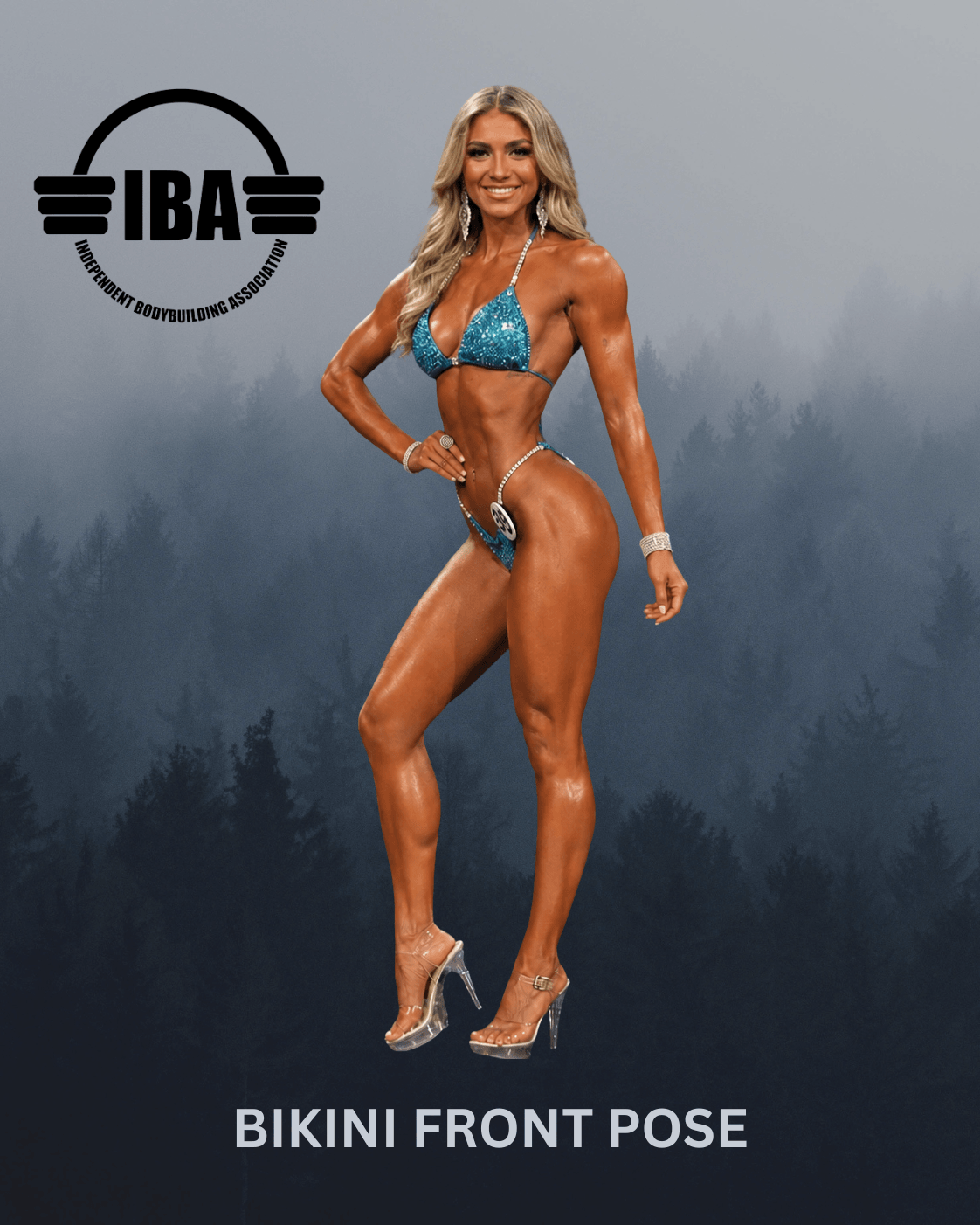
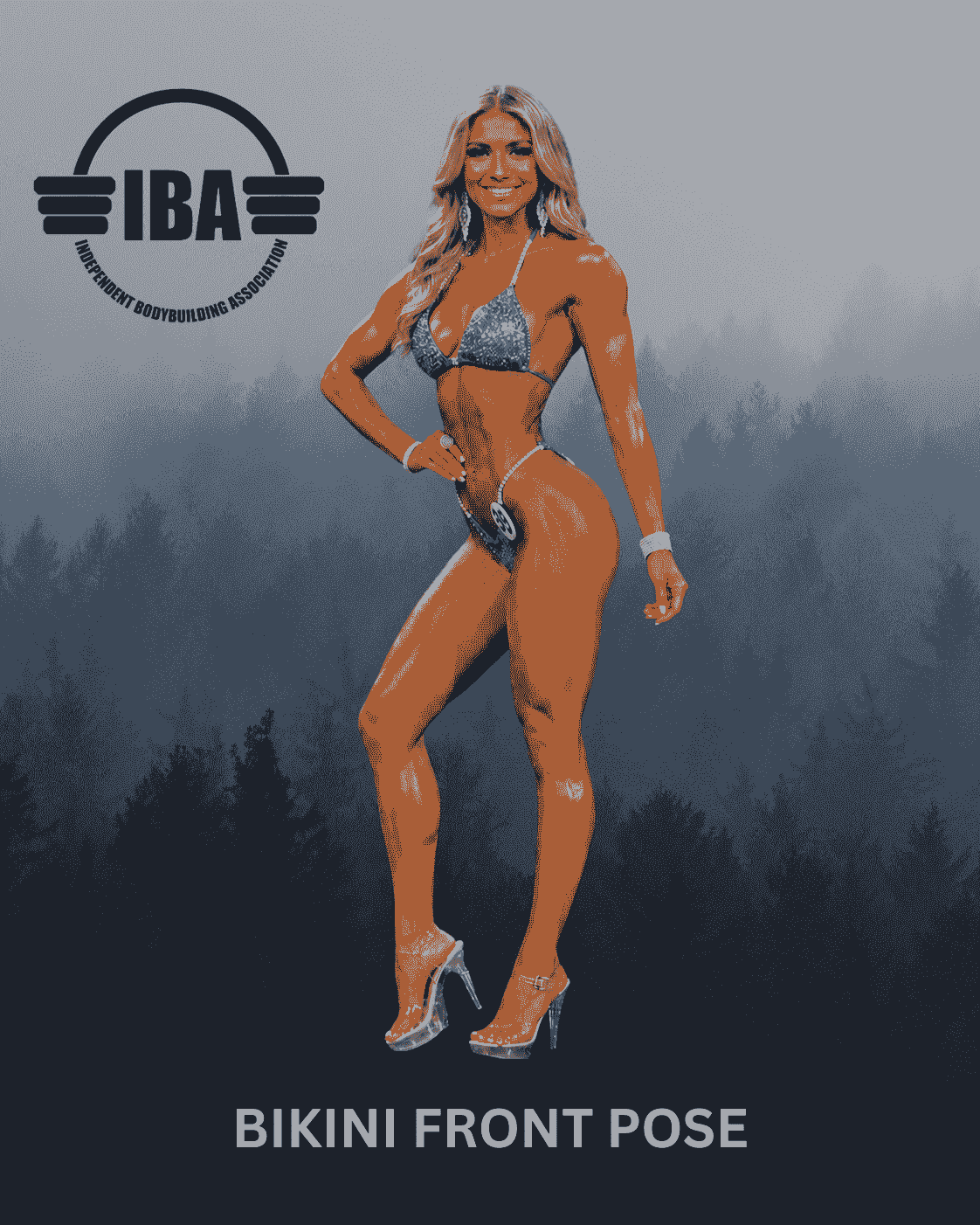
Front Pose
One hand should rest naturally on the hip; either side may be used.
The opposite arm should remain relaxed alongside the body.
Shoulder width and lat development may be visible but should not be exaggerated or flared.
The competitor number should be worn on the hip and remain visible to the judges.
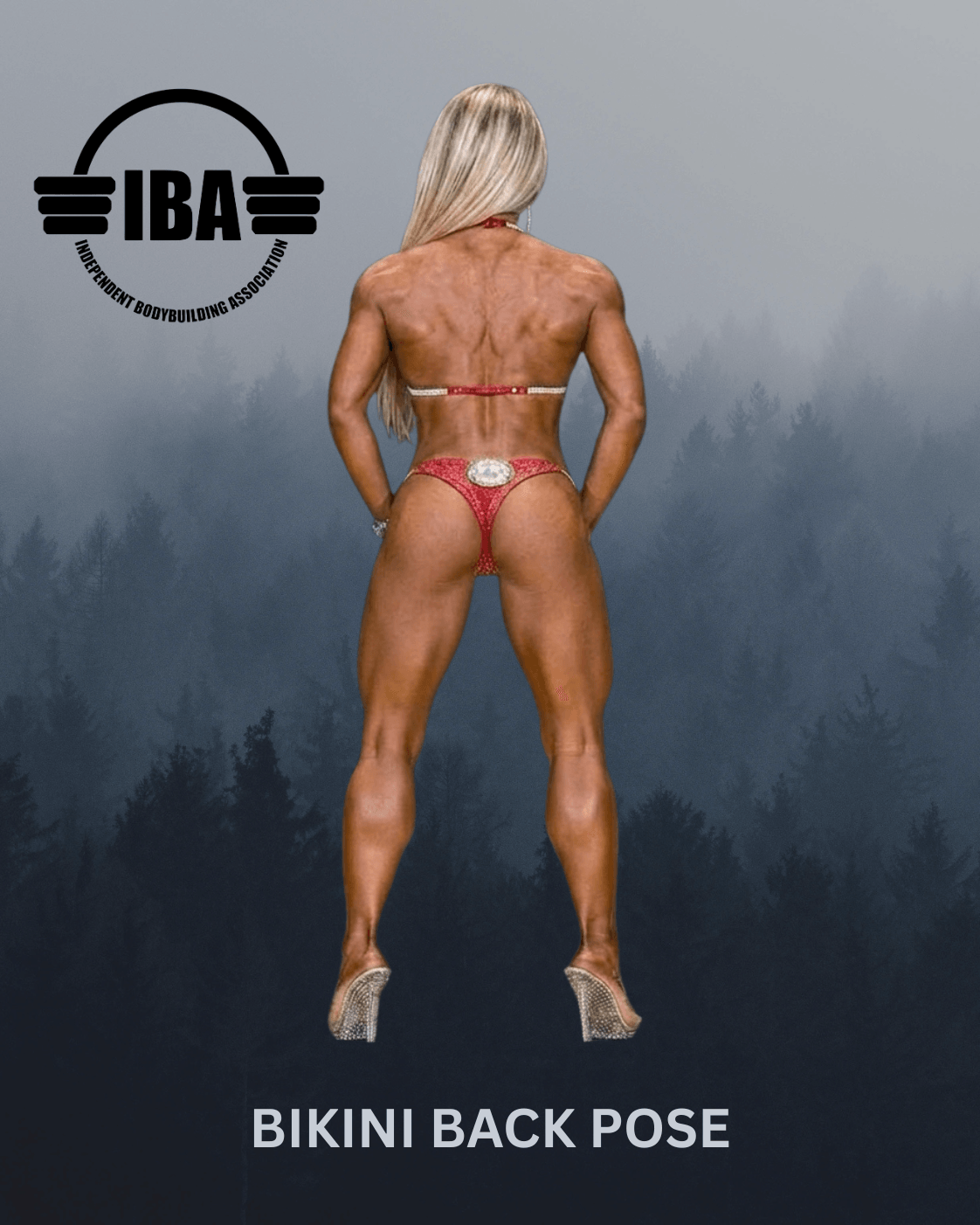
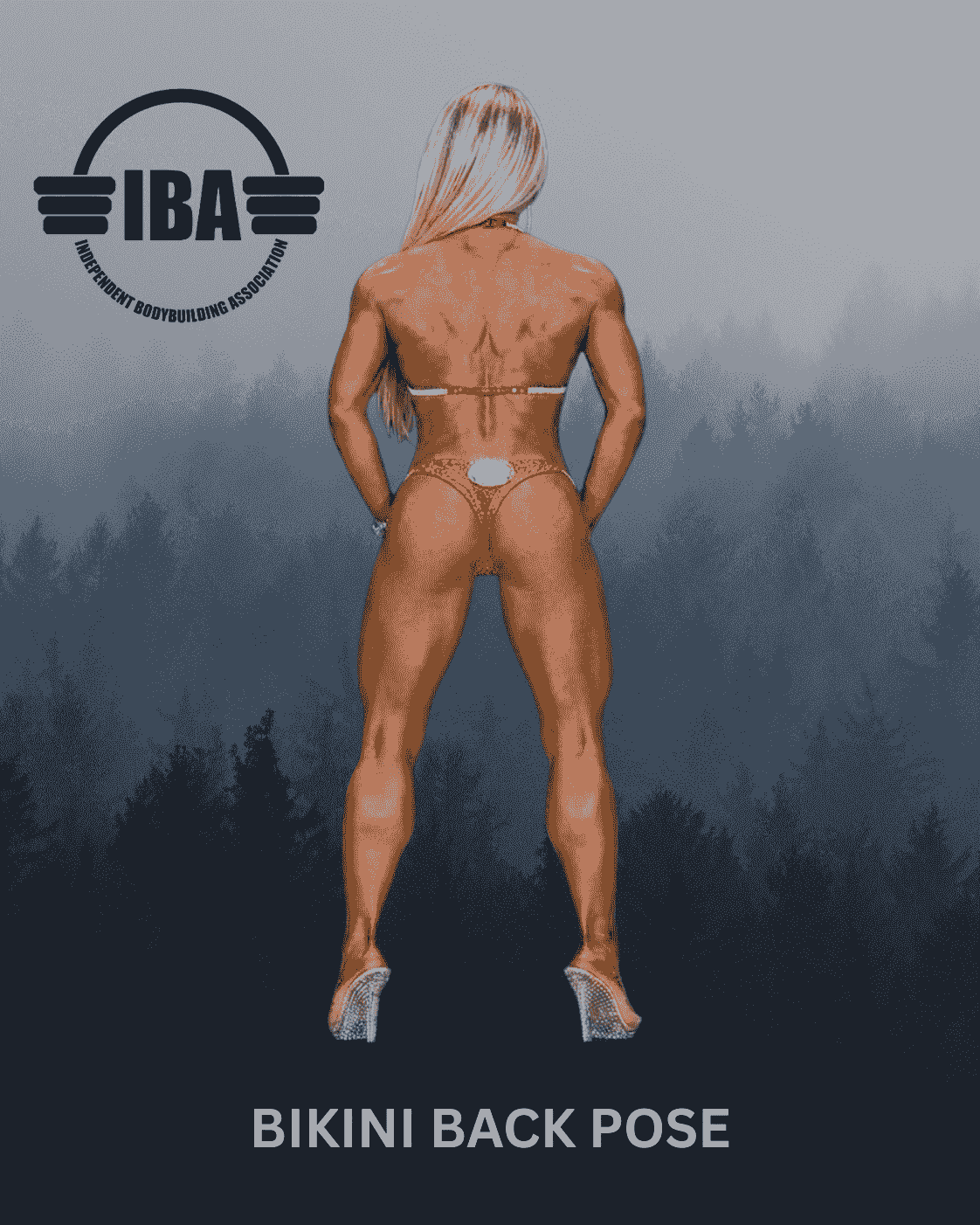
Back Pose
Feet should be approximately shoulder-width apart and should not be crossed.
Excessively wide stances should be avoided.
Long hair must be moved away from the back to allow full visibility.
The back should be presented naturally and not posed to maximize width as is common in Figure or Women’s Physique divisions.
Arms should maintain a slight bend with hands resting gently against the thighs.
A subtle arch of the lower back or slight forward lean is acceptable; excessive bending forward should be avoided.
Bikini Walks
Bikini is the only division that includes walking evaluations as part of the judging process. Throughout these movements, judges assess not only the athlete’s physique but also how it presents while in motion, along with overall stage presence, confidence, and poise.
Competitors will enter the stage together as a class and take their places on designated markers before immediately assuming their front pose. Upon instruction from the Head Judge, athletes will turn to face the rear of the stage and hold their back pose. They will then be directed to walk toward the back of the stage, where they will again pause in their rear pose.