

Independent Bodybuilding Association
Independent Bodybuilding Association
WOMEN'S WELLNESS
- Inappropriate or disruptive conduct on stage, including overt sexuality, may lead to disqualification.
JUDGING STANDARDS
The Wellness division is distinguished by its emphasis on lower-body development. Unlike other physique categories, Wellness competitors are not expected to display equal muscularity between the upper and lower body. Instead, judges look for a noticeably more developed lower body while maintaining a balanced and athletic upper-body appearance.
Competitors should present a physique featuring prominent glutes, well-developed quadriceps, hamstrings, and calves, with the lower body serving as the dominant visual feature. The upper body should display muscular development in the shoulders, arms, and back, but without excessive thickness, width, or extreme conditioning.
- Athletes should appear lean and muscular while avoiding an overly hard, grainy, striated, or vascular look. The overall presentation should combine muscle development with shape, proportion, and femininity.
Balance and Proportion
The defining characteristic of Wellness is the contrast between the upper and lower body. While the shoulders, arms, and back should show visible muscularity, the legs and glutes should clearly carry greater muscle mass and development. The upper body should complement the physique without appearing underdeveloped or neglected.
Conditioning
Wellness competitors should exhibit a higher level of muscle definition than Bikini athletes, but less than what is expected in Figure competition. Visible separation between the quadriceps and hamstrings is desirable, and glutes should appear firm, rounded, and clearly connected to the hamstrings through a visible glute-ham tie-in.
Abdominals should be lean and defined without appearing deeply etched or overly detailed. The shoulders, arms, and back should display athletic definition while maintaining a smooth appearance. Deep muscle separations, striations, and excessive vascularity are not considered ideal.
Muscle Development
Overall muscularity should exceed that of the Bikini division. The lower body should showcase full, sweeping quadriceps, developed hamstrings, rounded glutes, and noticeable calf development. The upper body should feature well-shaped shoulders, a developed back, and muscular arms while remaining proportional to the category's lower-body emphasis.
Group Comparisons
Competitors will enter the stage together as a class and line up on designated stage markers before assuming their front pose. During comparisons, the Head Judge will instruct athletes to perform a series of quarter turns to the right, allowing judges to evaluate each competitor from the front, side, rear, and opposite side.
Athletes will be given adequate time to transition between poses and present each position. This portion of the competition is scored, and failure to execute the required poses correctly may negatively affect a competitor’s placement.
The Head Judge may also request athletes to change positions during comparisons. When a competitor’s number is called, they should acknowledge the request, identify the athlete they are switching with, and move respectfully to the new position before resuming their pose. Competitors should remember that stage placement during comparisons does not indicate ranking or final results.
Athletes with long hair should move it away from their back during rear poses to ensure judges have a clear view of their physique.
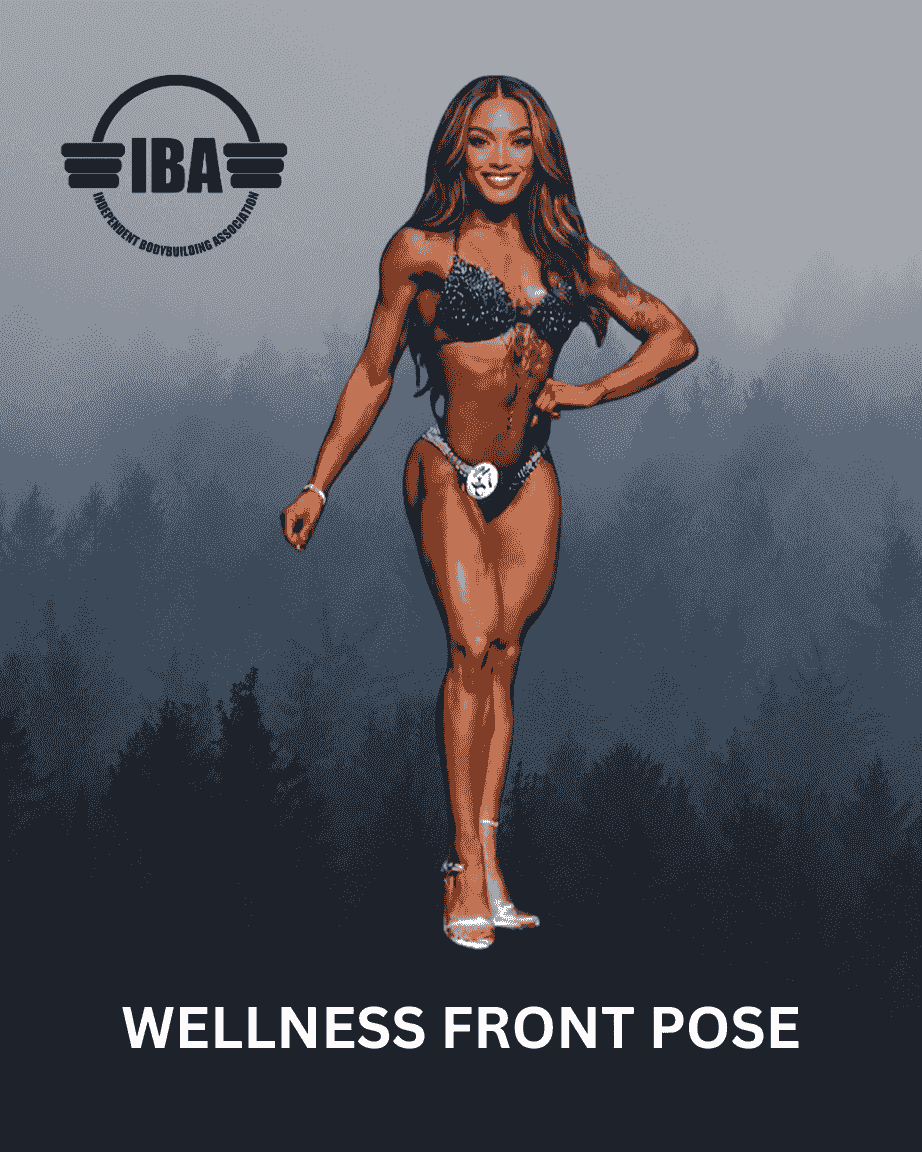
Front Pose
Face the judges with one foot positioned slightly forward.
The front knee may be softly bent.
The arm on the same side as the forward leg should hang naturally at the side without touching the body.
Hands and fingers should remain relaxed and natural, avoiding clenched fists or exaggerated hand positioning.
The opposite arm should be bent with the hand resting comfortably on the waist or hip.
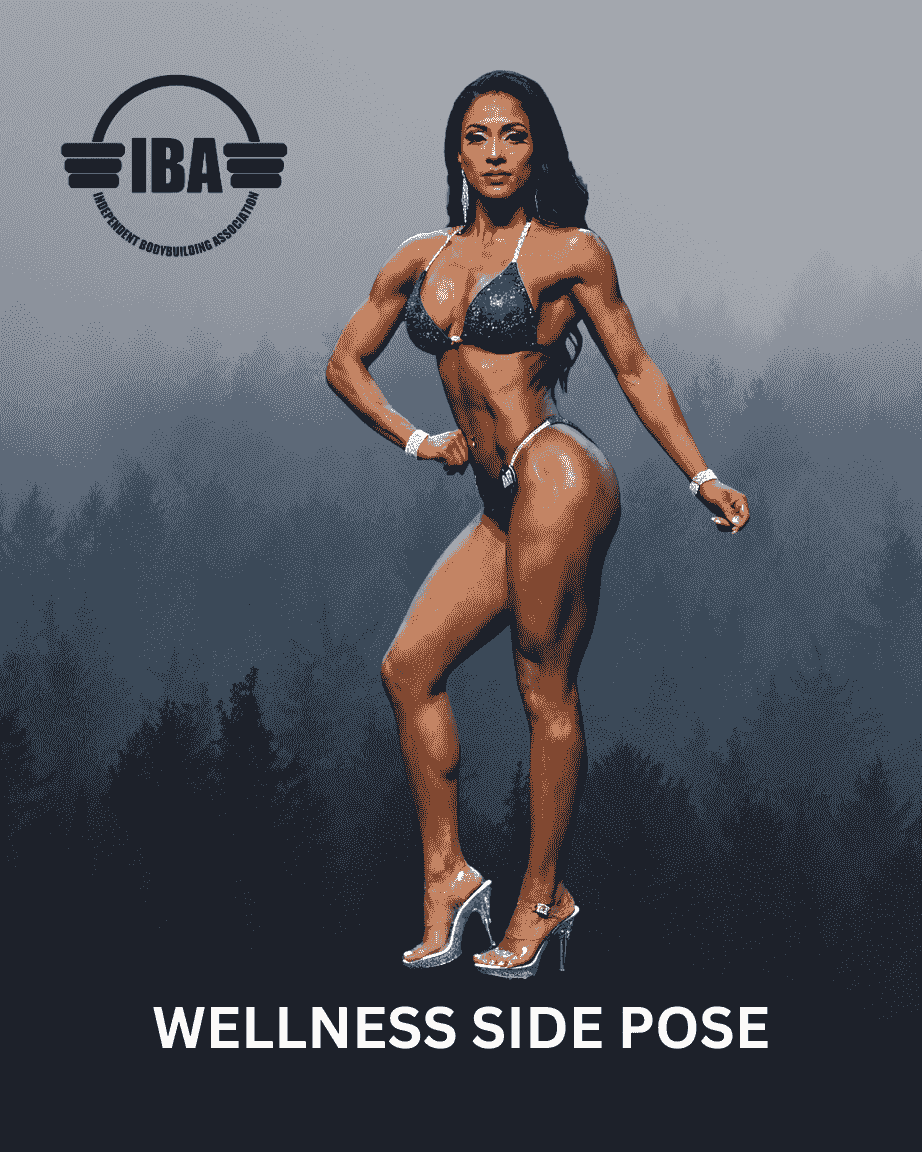
Side Pose
Competitors should maintain a side position while keeping their torso angled slightly toward the judges.
The leg closest to the judges may be straight or slightly bent.
The arm nearest the judges should hang naturally at the side without making contact with the body.
The upper body should be rotated enough to allow visibility of the rear shoulder and elbow.
The rear leg should remain bent to emphasize lower-body development.
Excessive sitting, squatting, or lowering into the pose should be avoided.
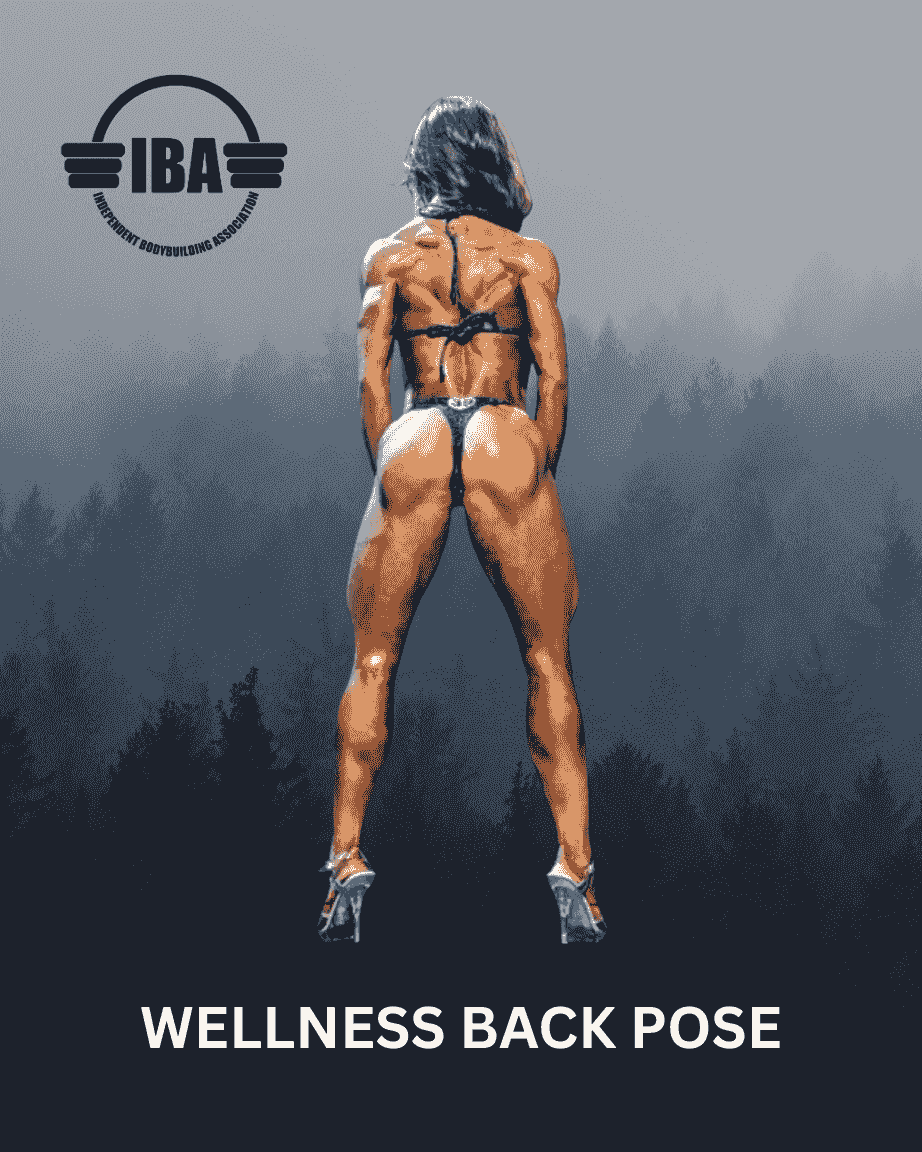
Rear Pose
Competitors will face the back of the stage to present their rear physique. Athletes with long hair should move it away from their back to ensure judges have an unobstructed view of their development and conditioning.
Feet should be positioned approximately shoulder-width apart without crossing. Excessively wide stances should be avoided. The pose should emphasize overall shape and lower-body development rather than creating the appearance of maximum back width, as is common in Figure or Women’s Physique divisions.
Arms should remain slightly bent with the hands resting naturally against the thighs. A subtle arch through the lower back or a slight forward lean is acceptable; however, competitors should avoid excessive bending or exaggerated positioning.
Individual Presentations
The individual presentation, commonly referred to as the stage walk, provides competitors with an opportunity to showcase their physique and stage presence. While this portion of the event allows athletes to display their personality and confidence, it is not included in the judging score used to determine final placings.
Depending on the event format selected by the promoter, athletes may perform either an "I" Walk or a "T" Walk. Some competitions utilize house music, while others permit athletes to submit their own music selections. Competitors should review event information carefully or contact the promoter in advance to confirm the walk format and music policies for a specific show.
- Inappropriate or disruptive conduct on stage, including overt sexuality, may lead to disqualification.


