
Independent Bodybuilding Association
Independent Bodybuilding Association
MEN'S CLASSIC PHYSIQUE
Classic Physique competitions involve two phases: Scored Group Comparisons and unscored Individual Presentations.
- Competitors wear plain black spandex briefs (no logos or branding). Trunks, underwear, and thong/T-back suits are not allowed.
- Bottoms should adequately cover the glutes without any intentional hiking up to reveal more. Athletes must maintain proper coverage at all times.
- To maximize judging clarity, remove all body hair (facial hair acceptable) and ensure an even, dark spray tan.
- Number tags should be placed on the front left hip and back of the suit.
- Participants must be 16 or older, with parental consent for minors.
- Competing in multiple categories within the same show is not permitted; crossover into qualified divisions is allowed.
- Any overtly sexual or disruptive behavior on stage can lead to disqualification.
Height Classes
When competitor participation is high, event organizers may divide a division into multiple height-based classes. Height classes are typically structured to create the most balanced distribution of athletes possible after registration has closed. The determination of class breakdowns and the number of classes offered is at the discretion of the event promoter.
Judging Criteria
Men’s Classic Physique is evaluated based on three primary components: symmetry, muscular development, and conditioning. The division is designed to showcase the timeless aesthetic associated with classic bodybuilding, emphasizing balance, proportion, and visual appeal over extreme size or conditioning.
Competitors should present a physique that reflects the classic bodybuilding standards of past decades, with symmetry and overall shape carrying greater importance than sheer muscle mass.
Symmetry
Athletes should demonstrate balanced muscular development throughout the entire physique. Desired characteristics include broad, rounded shoulders; well-developed arms; a wide, tapered back; and a lean, narrow waistline. Visible abdominal and oblique development should enhance the V-taper appearance.
Lower-body development should complement the upper body, with fully developed legs and glutes that maintain proper proportion. Excessively thick or blocky waistlines are generally considered less desirable within this division.
Muscular Development
Competitors should display a substantial yet proportionate amount of muscle throughout the body. Muscle size should enhance overall aesthetics and flow, creating a balanced and harmonious appearance from top to bottom.
Conditioning
Athletes are expected to present a lean, defined physique with clear visibility of all major muscle groups. However, conditioning should not reach the extreme levels commonly seen in open bodybuilding. Excessive hardness, deep striations, or overly grainy muscularity are not the goal. The ideal presentation reflects the classic physique standards associated with bodybuilding's golden era, emphasizing shape, fullness, and refined muscular definition.
Group Comparisons
Competitors will be brought on stage together within their class, line up in designated positions, and assume the front-relaxed stance. During comparison rounds, athletes will be directed through a series of mandatory poses designed to evaluate both symmetry and muscular development.
Competitors are encouraged to move efficiently between poses. Excessive transitions, elaborate setups, or delayed positioning may result in a competitor not being fully set before the next command is issued.
Proper pose execution is essential for judging. Athletes should consistently present their physiques in the prescribed manner to ensure judges can accurately evaluate all aspects of development, conditioning, and presentation. Failure to perform poses correctly may negatively affect scoring.
Symmetry Round
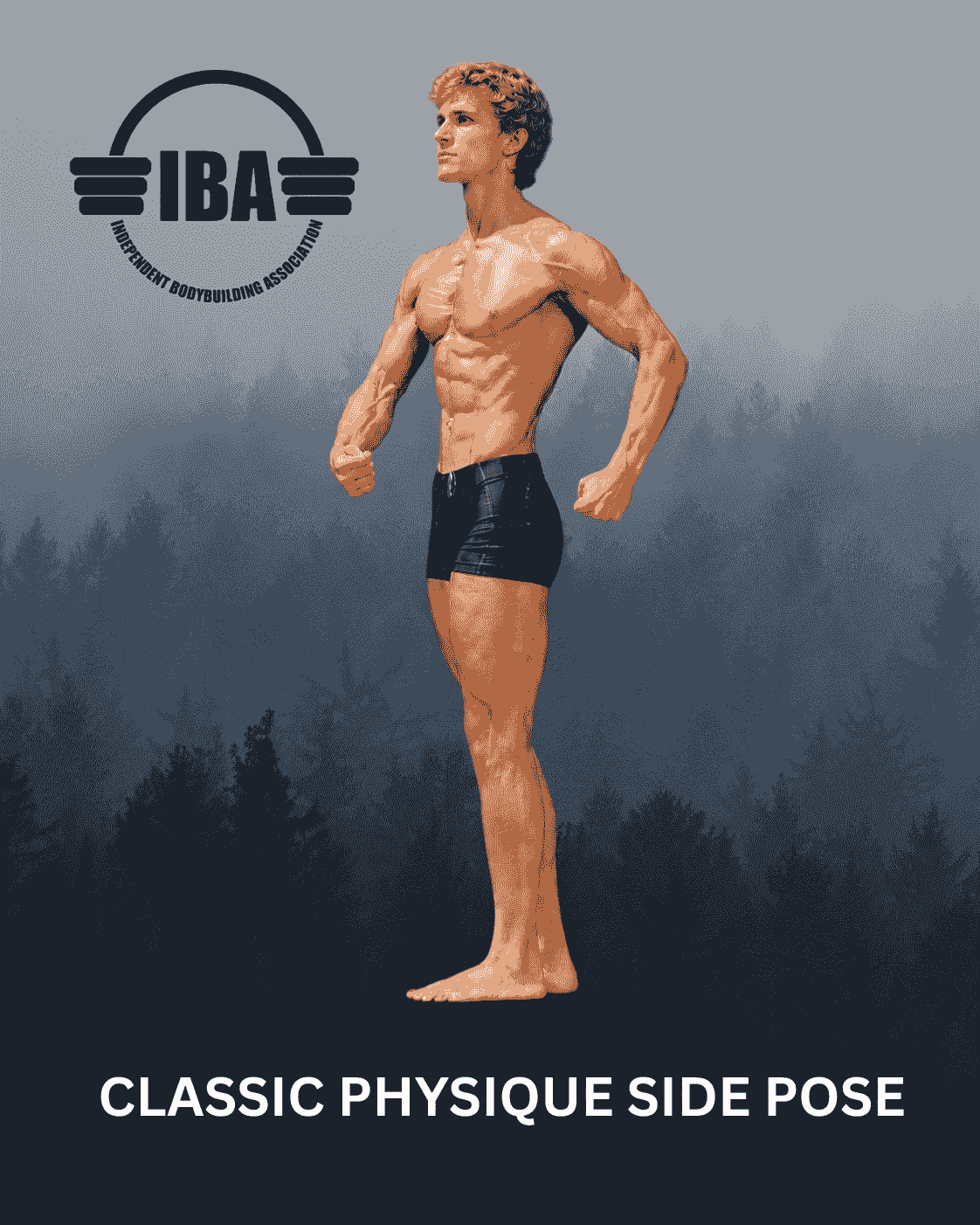
The Head Judge will instruct competitors to perform quarter turns to the right. Athletes will be evaluated from four primary viewpoints:
Front
Right Side
Rear
Left Side
Competitors will be given sufficient time in each position for evaluation before moving to the next quarter turn. This process will continue until all athletes have been assessed by the judging panel.
The Head Judge may request competitors to exchange positions on stage at any point during comparisons. When called, athletes should acknowledge their number, identify the competitor involved in the switch, move respectfully to the assigned location, and resume their pose. Stage position should not be interpreted as an indication of ranking or placement.
Muscularity Round
Throughout the comparison process, the Head Judge will introduce mandatory muscularity poses alongside the quarter-turn sequence. Competitors must immediately assume each pose when called and return to the appropriate relaxed position when instructed.
Mandatory poses may include the following, although the order may vary:
Front Double Biceps
Right Side Chest
Back Double Biceps
Left Side Chest
Hands-Over-Head Abdominals
Classic Pose of Choice #1
Classic Pose of Choice #2
The two athlete-selected classic poses must represent recognized classic physique poses and should effectively showcase balance, aesthetics, and presentation.
Examples of Acceptable Classic Poses
Competitors may choose from a variety of classic bodybuilding poses, including but not limited to:
Archer Pose
Vacuum Pose
Manis Pose
Three-Quarter Back Double Biceps
Crucifix Pose
Victory Pose
Front Lat and Biceps Pose
Abdominal and Biceps Pose
Three-Quarter Front Double Biceps
Atlas Pose
Any approved classic pose performed from a kneeling or lunge position
Athletes should execute all poses with proper form and presentation standards. Deviating from the prescribed pose structure may result in lower evaluations from the judging panel.