
Independent Bodybuilding Association
Independent Bodybuilding Association
MEN'S PHYSIQUE
Men’s physique contests include two parts: Scored Group Comparisons and unscored Individual Presentations.
- Board shorts are worn, in any color or pattern, with a length no higher than 6-8 inches above the kneecap.
- Shorts may display a logo but cannot bear another organization’s branding.
- Competitors should display their number on the front left hip and back center of their shorts.
- To showcase their physique, athletes should remove all visible body hair (facial hair acceptable) and apply an even spray tan.
- All competitors must be at least 16 years old. Those under 18 need parental consent and must be accompanied by a guardian.
- Participants may not enter other categories at the same event but can crossover into all divisions they qualify for.
- Any overtly sexual posing, inappropriate conduct, or disruptive behavior on stage may result in disqualification.
Height Classes
When competitor participation is high, promoters may divide the Men's Physique division into multiple height-based classes. Class breakdowns are determined after registration closes and are designed to distribute athletes as evenly as possible. The number of classes and height cutoffs are established at the discretion of the event promoter.
JUDGING CRITERIA
Men's Physique emphasizes an athletic, muscular appearance highlighted by a broad upper body, narrow waist, and noticeable V-taper. Competitors should present a lean and well-developed physique without the extreme muscularity or conditioning typically associated with Classic Physique or Bodybuilding divisions.
Structure and Balance
Judges look for broad, rounded shoulders, well-developed arms, and a wide, tapered back that creates a strong upper-body silhouette. The waist should appear tight and lean, showcasing visible abdominal and oblique development.
Although the division primarily emphasizes upper-body aesthetics, competitors should still demonstrate proportional development in the lower body, including the quadriceps, hamstrings, and calves.
Muscularity
Athletes should display noticeable muscle mass and athletic development while maintaining a physique that is less heavily muscled than those seen in Classic Physique and Bodybuilding competitions.
Conditioning
Competitors should exhibit a lean and defined appearance with visible muscle separation and overall muscular detail. However, excessive striations, grainy conditioning, or prominent vascularity are not considered ideal for this division.
Group Comparisons
During comparisons, competitors will enter the stage as a class and line up on designated stage markers before assuming their front relaxed position. The Head Judge will direct athletes through a series of quarter turns to the right, allowing judges to evaluate each competitor from the front, side, rear, and opposite side.
Athletes should transition smoothly between poses and consistently present their physique in a manner that highlights symmetry, muscularity, and overall balance. Proper execution of each position is essential, as failure to follow posing instructions may negatively impact scoring.
The Head Judge may also request competitors to change positions during comparisons. When a number is called, the athlete should acknowledge the request, identify the competitor they are switching with, and move respectfully to the designated position before resuming their pose. Competitors should understand that stage placement during comparisons does not reflect ranking or final placement.
Front Pose
Competitors should face directly toward the judges.
Feet should remain parallel, although slight outward positioning of the toes is acceptable.
Both arms may briefly remain at the sides to display symmetry before transitioning into the required pose.
The arm nearest the judges should rest on the hip.
The opposite arm should remain relaxed and natural without being held excessively away from the body.
Overly aggressive flexing, exaggerated posing, or clenched fists should be avoided.
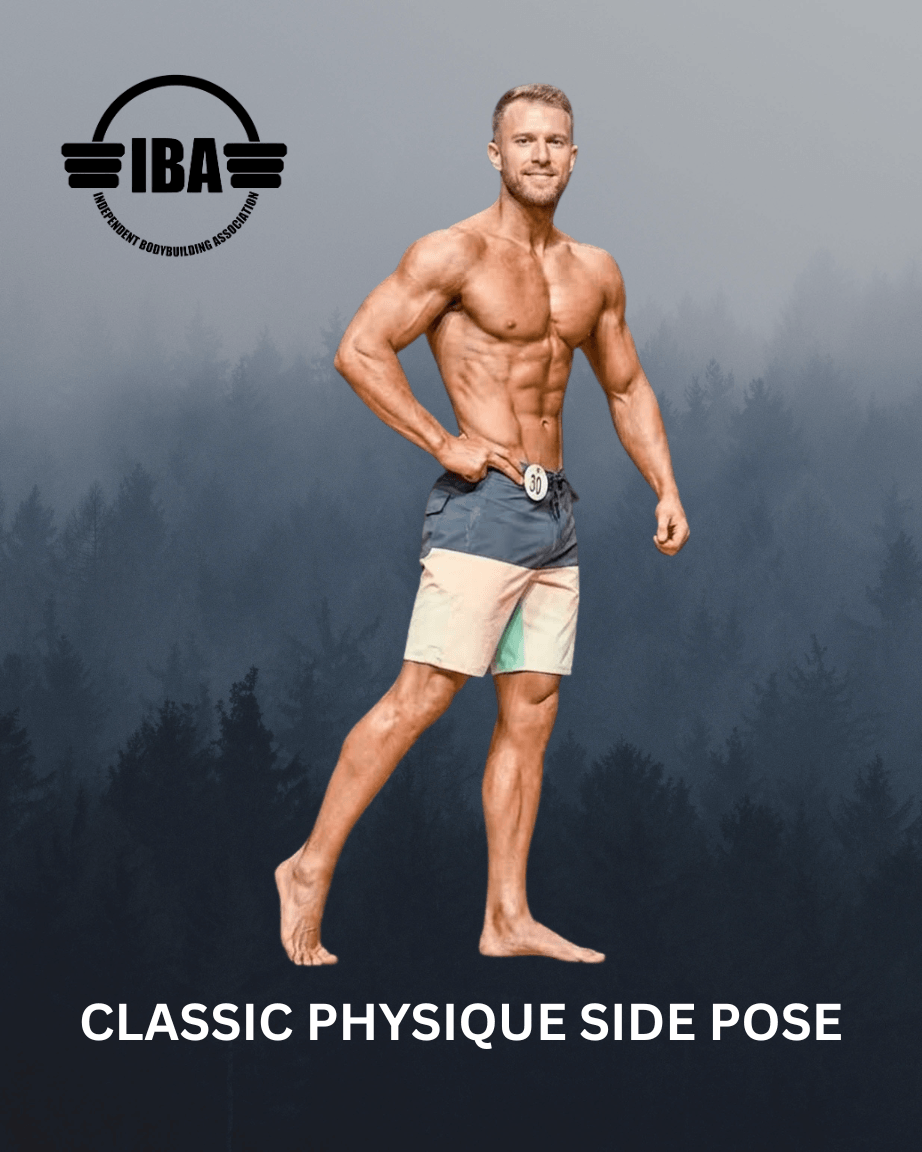
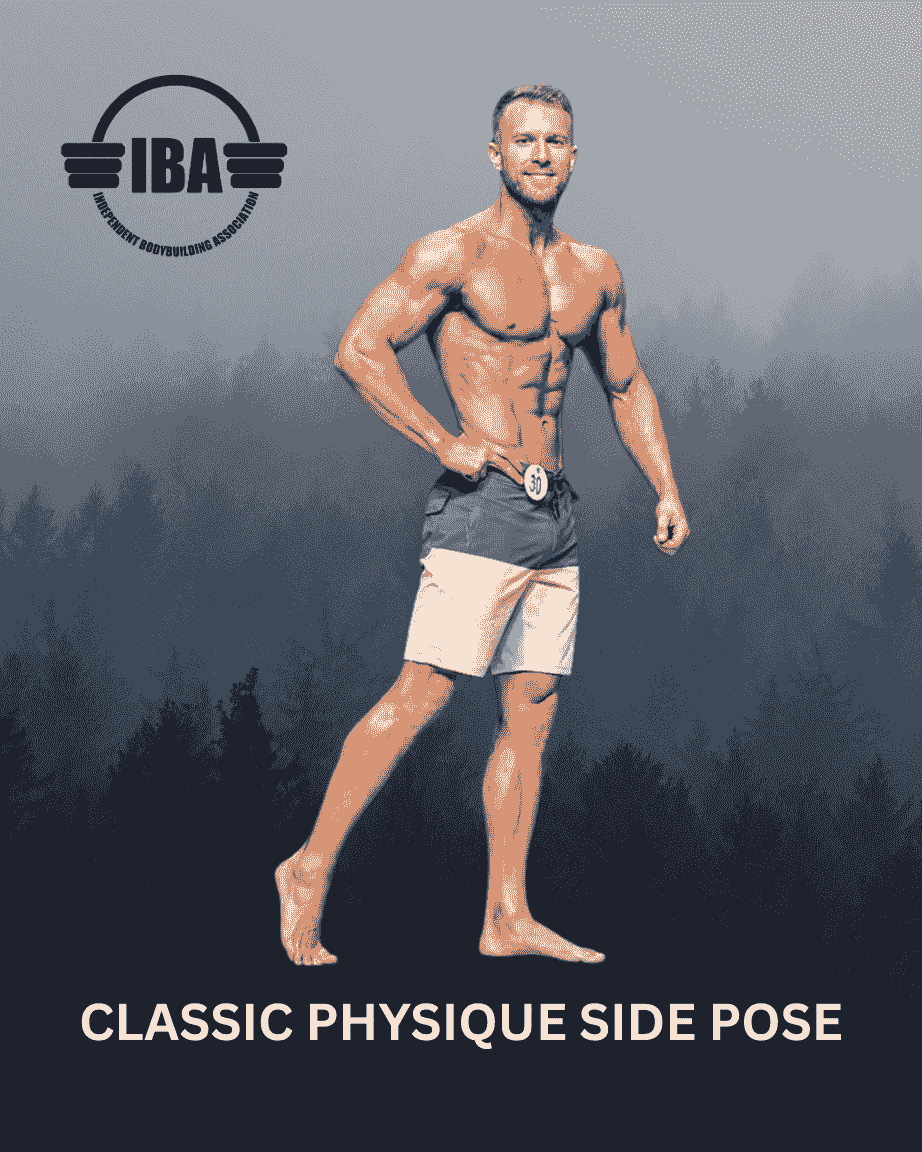
Side Pose
Hips should remain aligned with the side of the stage while the head is turned toward the judging panel.
Competitors may rotate their shoulders slightly toward the judges, up to approximately 35 degrees, to enhance the appearance of upper-body taper.
The arm farthest from the judges should hang naturally at the side.
The hand closest to the judges should rest on the hip.
Feet should be staggered, with emphasis placed on displaying calf development by tightening the rear calf.
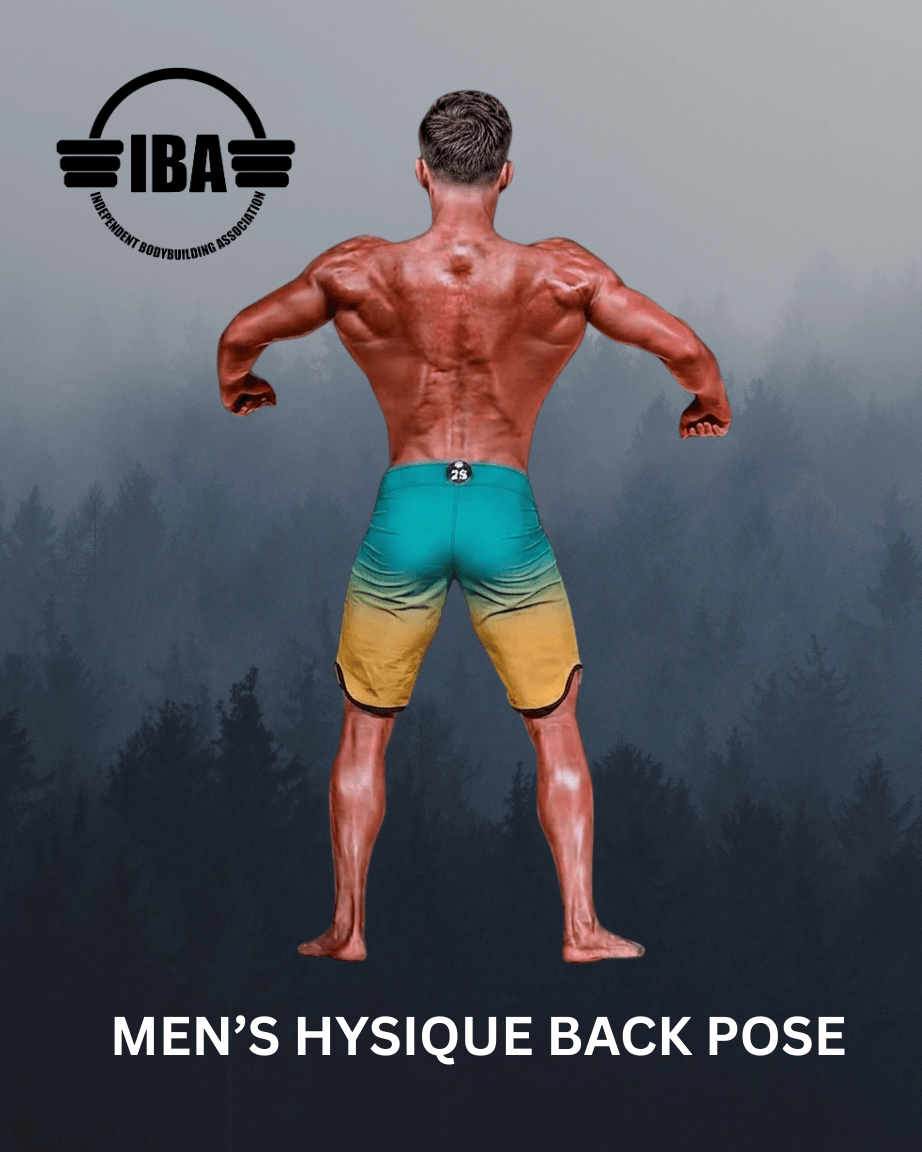
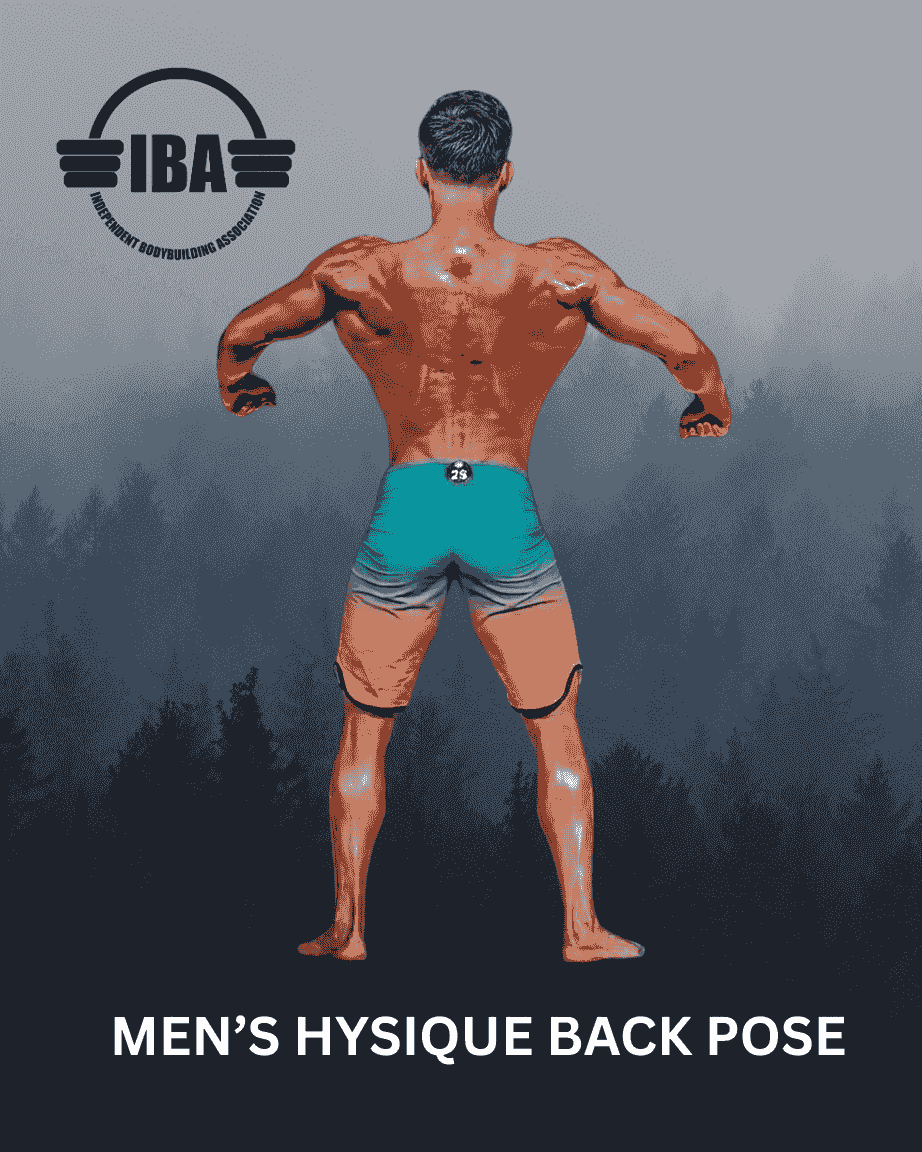
Rear Pose
Competitors should face the back of the stage.
Feet should remain parallel, with slight outward toe positioning permitted.
Lats should be expanded to showcase upper-body width and V-taper.
One hand may remain positioned on the hip while maintaining a relaxed and confident presentation.
Individual Presentations
The individual presentation, commonly known as the stage walk, allows competitors to showcase their physique, personality, and stage presence. This segment is performed for presentation purposes only and is not included in the judging score used to determine final placings.
Depending on the event format, promoters may utilize either an "I" Walk or a "T" Walk. Some competitions provide house music for all athletes, while others permit competitors to submit their own music selections. Athletes should review event information carefully or contact the promoter directly to verify the presentation format and music policies for a specific competition.