

Independent Bodybuilding Association
Independent Bodybuilding Association
WOMEN'S PHYSIQUE
This division involves two phases: Group Comparisons, scored, and Individual Presentations, unscored.
- Suits are two-piece with crisscross back straps, available in various colors and styles.
- Thong or T-back suits are not permitted. Coverage must be sufficient and securely fastened (see images below).
- Jewelry is allowed but should not distract from the physique.
- A dark, even spray tan enhances stage visibility for judges.
- Contestants are barefoot and may wear jewelry as desired.
- Number tags should be attached to the front left hip and back of the suit.
- Minimum age is 16; minors require parental consent and supervision.
- Participants cannot compete in multiple categories at the same show but may crossover into eligible divisions.
- Disruptive or inappropriate on-stage behavior, including overt sexuality, may lead to disqualification.
JUDGING STANDARDS
Women's Physique competitors should present a balanced, athletic, and feminine appearance characterized by significant muscular development, symmetry, and overall conditioning. Athletes are expected to display a lean, well-conditioned physique with full muscle development throughout the body.
Symmetry
Competitors should demonstrate proportional development between the upper and lower body. Muscularity and conditioning should be evenly distributed to create a harmonious and aesthetically pleasing physique.
Muscular Development
Among the women's physique-related divisions, this category emphasizes the highest level of muscularity. Competitors should exhibit substantial, well-rounded muscle mass that is balanced and proportionate from head to toe.
Conditioning
Athletes should display a high level of leanness and muscle definition. Visible muscle separation and appropriate striations are encouraged. However, competitors should avoid an excessively depleted appearance, including overly gaunt facial features, stringy musculature, or a loss of muscle fullness resulting from extreme dieting or glycogen depletion.
Group Comparisons
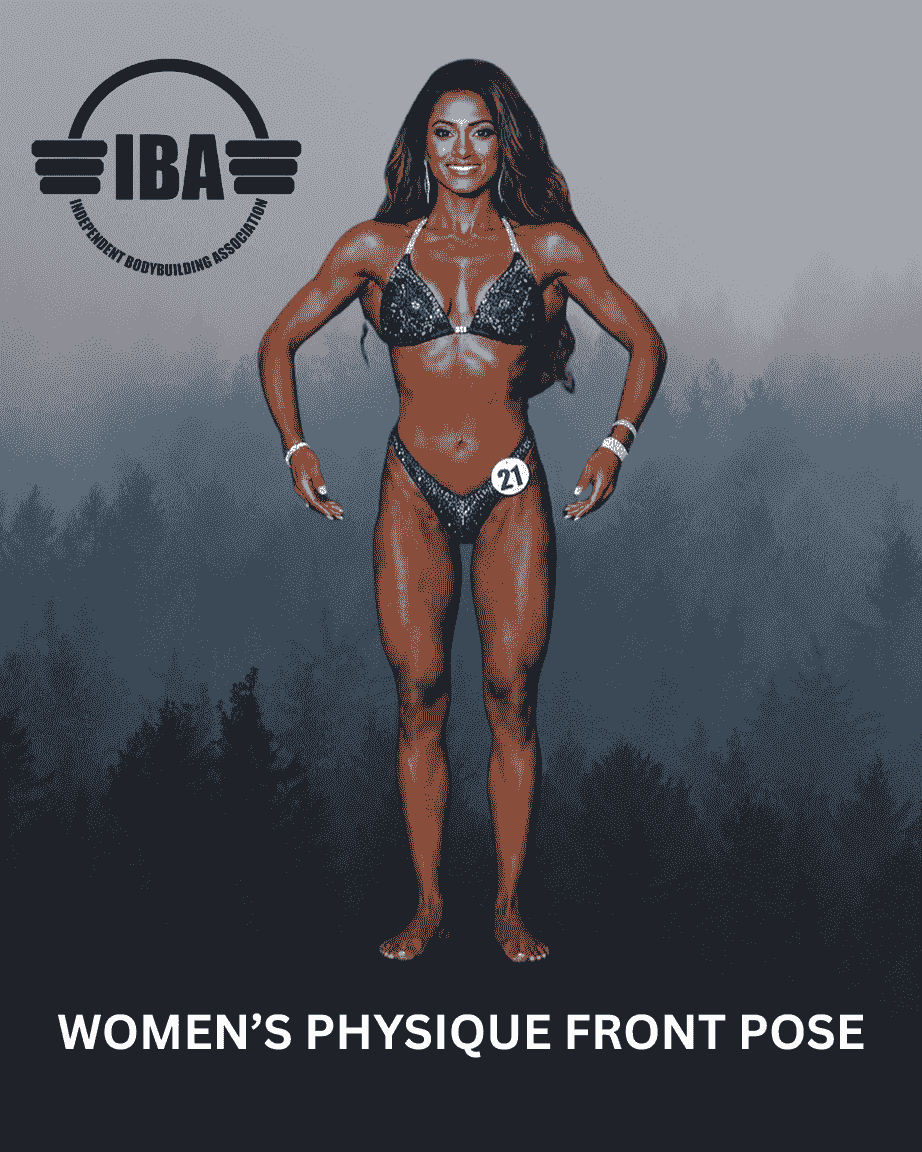
Competitors will enter the stage as a group within their class, line up in designated positions, and immediately assume the front-relaxed stance. During comparison rounds, athletes will be guided through a sequence of poses designed to evaluate both symmetry and muscularity.
To ensure accurate assessment, competitors must perform all poses according to the prescribed standards. Failure to execute poses correctly may impact scoring.
Symmetry Assessment
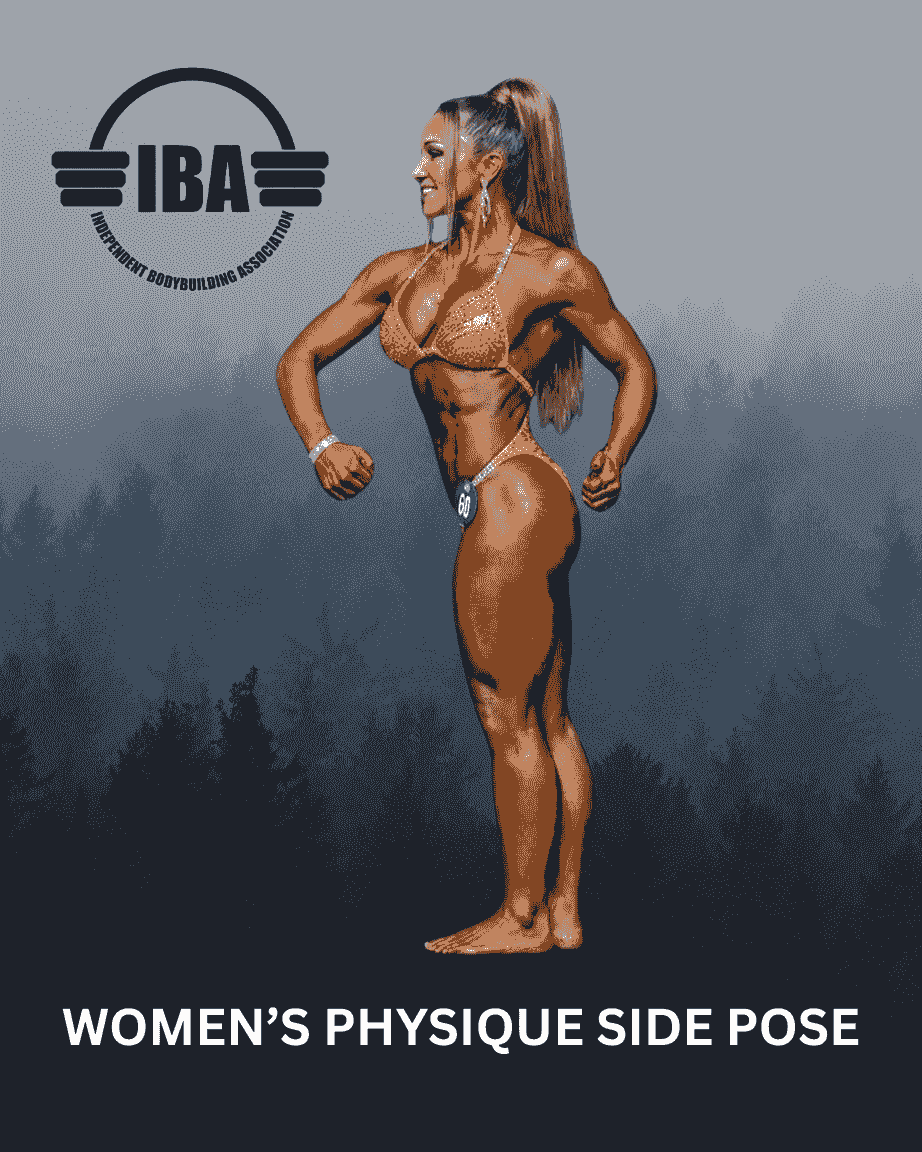
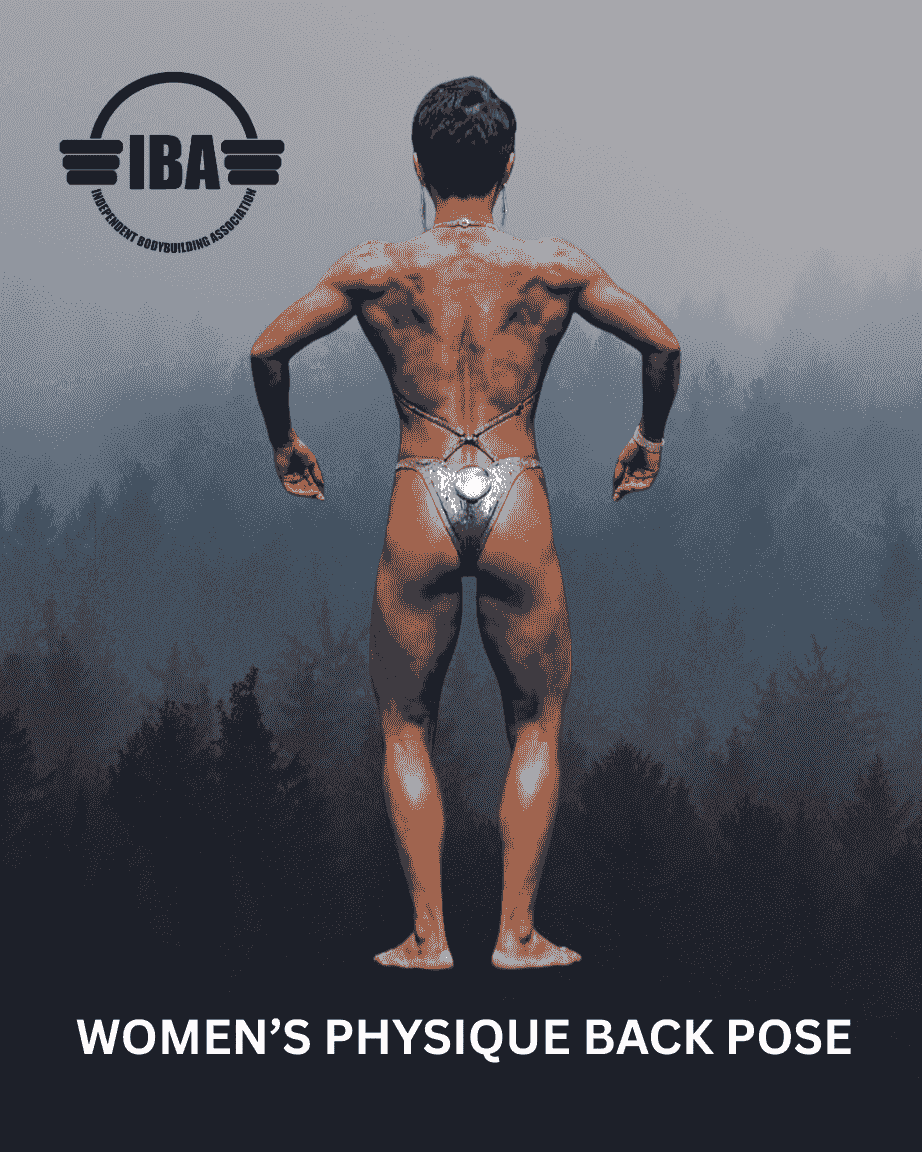
The Head Judge will instruct competitors to perform quarter turns to the right. Athletes will be evaluated from four primary viewpoints:
Front
Right Side
Rear
Left Side
The quarter-turn sequence will continue until all competitors have been fully assessed by the judging panel.
At any point during comparisons, the Head Judge may request competitors to change positions on stage. When called, athletes should acknowledge their number, identify the competitor with whom they are switching, move respectfully to the designated position, and resume their pose. Stage placement should not be interpreted as an indication of ranking or placement.
During rear-facing poses, competitors with long hair should move it aside to provide judges with an unobstructed view of the back musculature.
Muscularity Assessment
As the comparison round progresses, the Head Judge will incorporate mandatory muscularity poses. Competitors must assume each pose when called and may be instructed to relax between poses by returning to the appropriate symmetry stance.
Mandatory poses may include, but are not limited to:
Front Double Biceps (open hands)
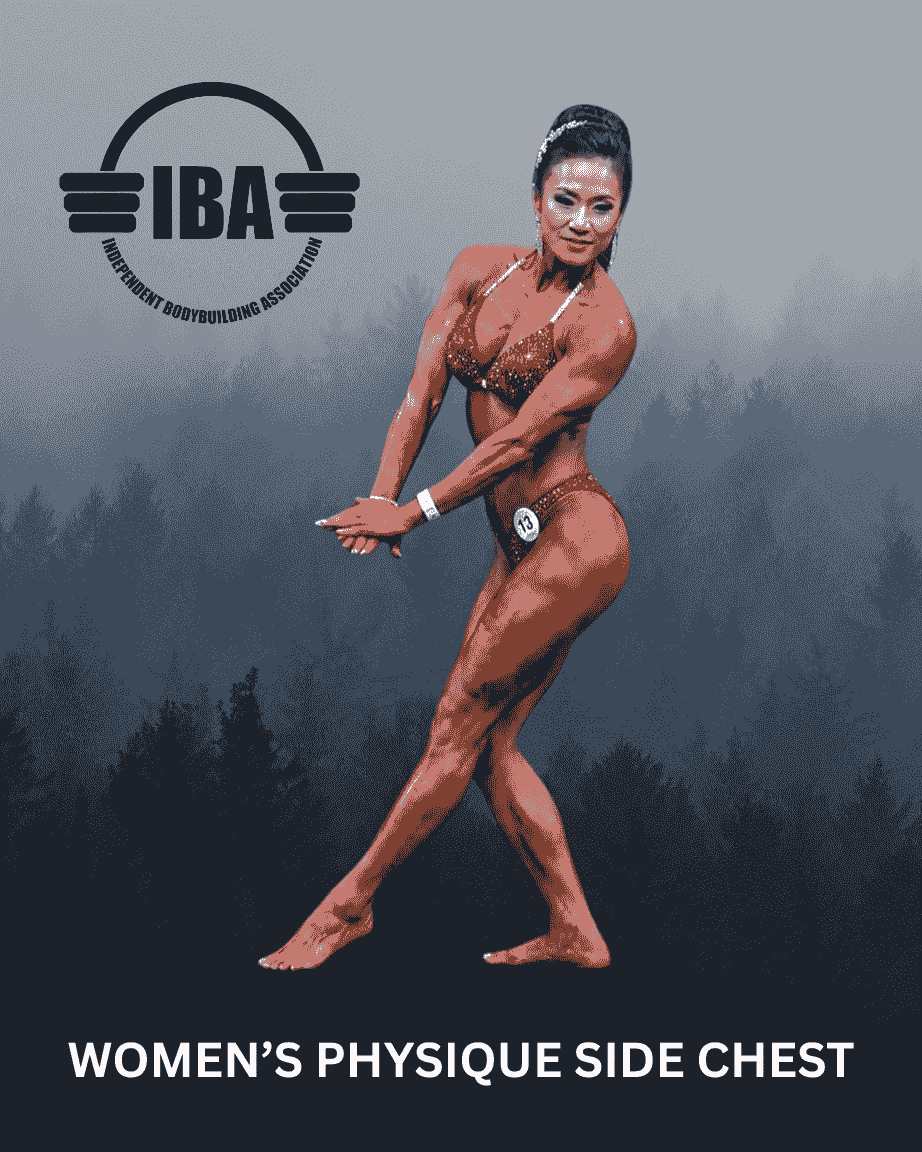
Right Side Chest (front leg and arms extended)
Right Side Triceps (front leg extended)
Back Double Biceps (open hands)
Left Side Chest (front leg and arms extended)
Left Side Triceps (front leg extended)
Hands-Over-Head Abdominal Pose
The order of poses may vary at the discretion of the Head Judge.
Symmetry Assessment
The Head Judge will instruct competitors to perform quarter turns to the right. Athletes will be evaluated from four primary viewpoints:
Front
Right Side
Rear
Left Side
The quarter-turn sequence will continue until all competitors have been fully assessed by the judging panel.
At any point during comparisons, the Head Judge may request competitors to change positions on stage. When called, athletes should acknowledge their number, identify the competitor with whom they are switching, move respectfully to the designated position, and resume their pose. Stage placement should not be interpreted as an indication of ranking or placement.
During rear-facing poses, competitors with long hair should move it aside to provide judges with an unobstructed view of the back musculature.
Muscularity Assessment
As the comparison round progresses, the Head Judge will incorporate mandatory muscularity poses. Competitors must assume each pose when called and may be instructed to relax between poses by returning to the appropriate symmetry stance.
Mandatory poses may include, but are not limited to:
Front Double Biceps (open hands)
Right Side Chest (front leg and arms extended)
Right Side Triceps (front leg extended)
Back Double Biceps (open hands)
Left Side Chest (front leg and arms extended)
Left Side Triceps (front leg extended)
Hands-Over-Head Abdominal Pose
The order of poses may vary at the discretion of the Head Judge.


